As soon as the first case of coronavirus was reported in Ethiopia the price of some goods showed a significant increase. The goods include medical kits, sanitizers, disinfectants, masks and other consumable goods such as oil, rice and teff.
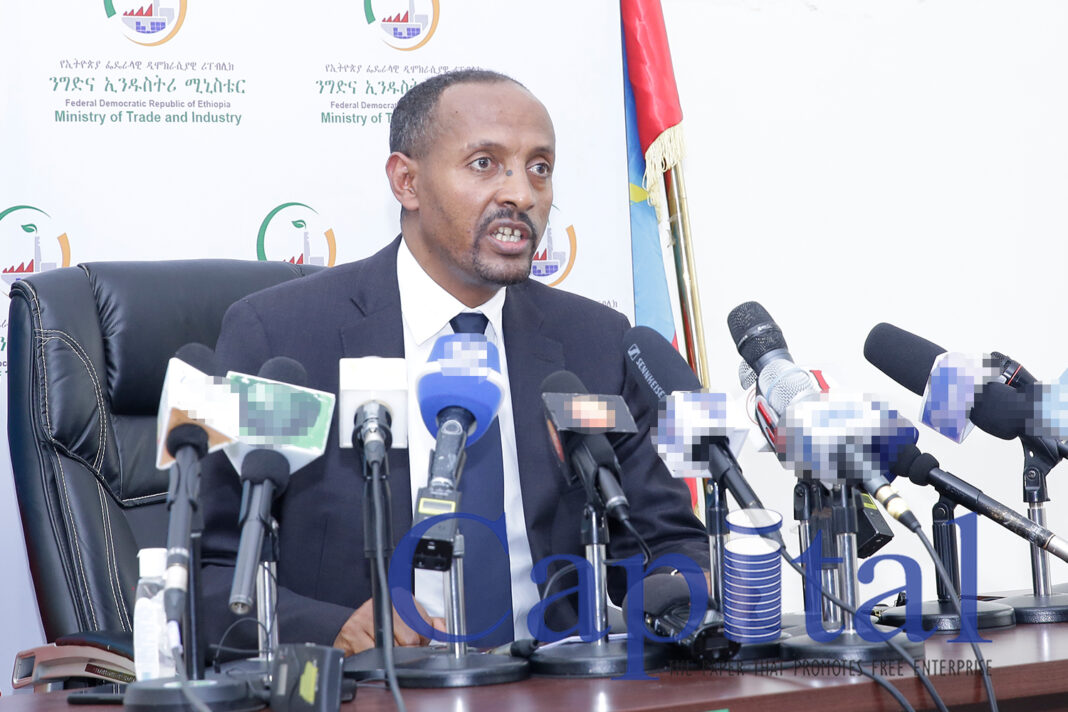
The Ministry of Trade and Industry (MoTI) said that it has observed a price hike and shortage of teff in the market. “Although the problem is on the supply and distribution the government is trying to solve the problem by giving financial support to unions and cooperatives. Currently unions are distributing 1.5 million quintals of teff to the market,” said Melaku Alebel Minister of Trade and Industry.
A report by the MoTI shows the government has found 25,068 traders who were unjustifiably increasing the price of goods all over the country.
Starting from March 10, 2020 up to now MoTI took measure on 25,068 traders who were accused of manipulating prices of goods. 10,000 were released by warning; 13,350 were fined; 424 arrested and waiting trial; 404 banned from doing business and 890 licenses were revoked.
According to the ministry, the government is working to develop the production of such goods locally to increase the supply.
Currently 81 factories are selected to produce 5.1 million masks per day and seven of them has already started the production. The minister also said that the country has a capacity to cover the local demand of detergents, as 43 factories are producing 2,258,200 kg of soap and 357,951 liter of liquid soap per day.
To control the price hike on food commodities the ministry is distributing the commodities through unions, including sugar, wheat, maize, rice, oil and teff.
The Minister also said that the country is also working to increase the oil deposited capacity of the country.
“The international crude oil price drop is an opportunity for Ethiopia, we are working to increase our capacity on oil depot and increase the import rate of oil,” said Melaku.
According to the minister the country imports 399 million liters of crude oil per month; the country spends more than 3 billion dollars annually.
The Ministry has reported that the eight months export performance of the country fetched USD 1.8 billion, half a billion lower than its target. However as the ministry stated the country does not face much challenges on the export of items as it was expected since most of the items are related with food commodities.
Ministry targeting those who hike prices of commodities
Topics

Popular Categories

Previous article
Next article