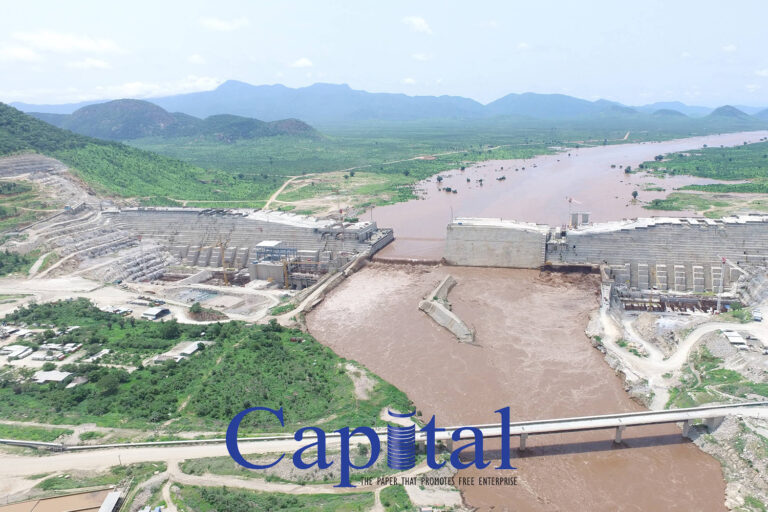
A new study commissioned by the Ethiopian Economics Association reveals that the Grand Ethiopian Renaissance Dam (GERD) has a huge positive impact in the GDP growth for all East African countries.
The report states that the simulation results reveal that GERD operation does stimulate real GDP growth in the Eastern Nile basin (Ethiopia, Sudan and Egypt) if it goes operational in 2024 following a four – year filling period (2020 – 2024).
According to the study, the basin-wide annual gain in real GDP due to GERD operation stands at USD 8.07 billion in 2024 relative to the baseline.
When fully operational, the GERD is expected to generate about 15.7 TWh energy per year. This corresponds to an increase in Ethiopia’s hydropower production by 142.7 percent.
The construction of the GERD will also increase Ethiopia’s capital stock by about 6.3 percent, according to the study.
The study indicated that Sudan is expected to benefit from the GERD operation in many respects. “The GERD is expected to trap much of the silt from the Blue Nile river that would otherwise fill up Sudan’s dams and will increase the existing power generated at Roseires, Sennar and Merowe hydropower plants by about 35.5 percent from 8.5 TWh/year to more than 11.6 TWh/year. This corresponds to an increase in hydropower production of 35.4 percent.”
It added that the GERD is also expected to reduce the negative impacts on agriculture as well as economically valuable infrastructure in Sudan caused by recurrent floods. “In addition to saving lives, it is expected that the GERD will help to prevent more than USD 200 million in annual flood risk damage along more than 1,000 km of the Blue Nile River from the Ethiopia-Sudan Border to Khartoum,” the study that refers different previous scientific papers says adding “flood damage risk will also be avoided in cities like Dongola, located far north of Khartoum that experience recurrent and devastating floods.”
The study indicated that the basin-wide gain in real GDP due to GERD operation is in the order of USD 8.07 billion.
Ethiopia earns a staggering USD 6.79 billon of the total basin-wide gain in real GDP induced by GERD operation while Sudan and Egypt earn USD 1.11 billion and USD 0.17 billion gain in real GDP, respectively, according to the study. “Thus, all the Eastern Nile countries are expected to benefit from GERD operation,” it added.
Yet, the distribution of the benefits is highly skewed with Ethiopia amassing 84 percent of the GDP gain followed remotely by Sudan that gains 14 percent of the benefit. Egypt earns a mere 2 percent of the basin – wide gain in GDP.
“This reveals that the GERD involves no potential economic costs on both Egypt and Sudan. Thus, accounting for engineering estimates of GERD’s impact on HAD power generation, the net economy-wide effect is positive for all countries including Egypt, reflecting a win-win outcome. This underscores the fact that the benefits of the GERD should be seen in the wider basin –wide economic perspective,” the report explained.
It has also added that if the filling is concluded in these four years the Ethiopian economy is expected to grow at the rate of 1.5 percent due to GERD operation and similarly, the economy of Sudan expands by 1.2 percent with GERD operating upstream, mainly due to enhanced capital stock resulting from the GERD induced flood damage reduction.
“Reduced sediment load and hence enhanced power generation in Sudan’s power plants induced by GERD operation would also stimulate economic growth in the Sudan. With benefits in terms of improved water use efficiency, the GERD would further improve economic growth in the Sudan. GERD operation does offer significant benefits for Egypt’s economy in terms of increased water supply due to reduced evaporation loss from the HAD, as well as the opportunity for improving water use efficiency as a result of a more regulated flow of water throughout the year. Overall, the results show that GERD operation would enhance Egypt’s economy to a certain extent (0.04%),” it added.
The welfare effects of the GERD, as measured by the equivalent variation (EV), would be substantial, according to the study document, the total welfare gain in the Eastern Nile countries induced by GERD operation is about USD 9.17 billion.
Ethiopia is expected to benefit a welfare gain of about USD 6.83 billion while the Sudan and Egypt are expected to experience a welfare gain of USD 1.17 billion each.
Thus, all the Eastern Nile countries experience a positive welfare change due to GERD operation, although the distribution is uneven with Ethiopia, Sudan and Egypt earning 74, 13 and 13 percent of the total welfare gain, respectively.
If the filling and operational period is delayed it would have also economic loss for the three countries according to the study.
It said that the effect of the GERD on real GDP in the Eastern Nile economies varies for different filling period of the dam.
“The gain in real GDP of the Eastern Nile basin declines to USD 5.97 billion when GERD operation is delayed by a year (i.e. it becomes operational in 2025). Extending GERD filling period by three and six years would bring its basin – wide economic significance (in terms of contribution to real GDP) down to USD 5.15 billion and USD 4.15 billion, respectively, from USD 8.07 billion gain in basin – wide real GDP expected to be realized if the GERD is filled in four years (2020 – 2024) period,” the study explained.
Ethiopia’s real GDP gain from the GERD is estimated to decline successively from USD 6.79 billion to USD 3.1 billion if GERD operation is delayed from 2024 to 2030 (i.e. delays by six years). The total loss to Ethiopia in terms of foregone real GDP gains due to delays in GERD operation up to 2030 would be USD 24.68 billion. Sudan and Egypt would lose a total real GDP gain of USD 4.47 billion and USD 790 million, respectively, for the same reason.
“Delaying the GERD operation period would also diminish economic growth in the Eastern Nile countries,” it says adding “extending GERD operation by six years to 2030 diminishes GERD induced economic growth in Ethiopia and Sudan to 0.25 and 0.9 percent, respectively, as compared to 1.5 and 1.2 percent economic growth the countries could achieve if the GERD goes operational in 2024.”
Economic growth rate in Egypt would also oscillate between 0.04 and 0.03 percent and remains, on the average, stable at 0.04 percent for all GERD operation periods considered.
Earlier operation of GERD will stimulate real GDP growth in the Eastern Nile basin
Fight against COVID 19
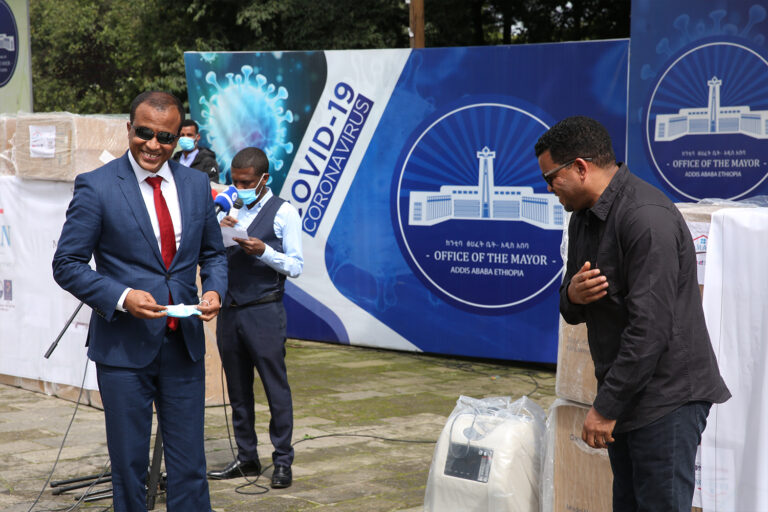
Different entities provided support for the fight against COVID 19 to the Addis Ababa City Administration.
USAID-Save the Children has extended COVID 19 emergency cash assistance worth 26 million birr to 4,429 households for three months in Addis Ababa in response to the pandemic.
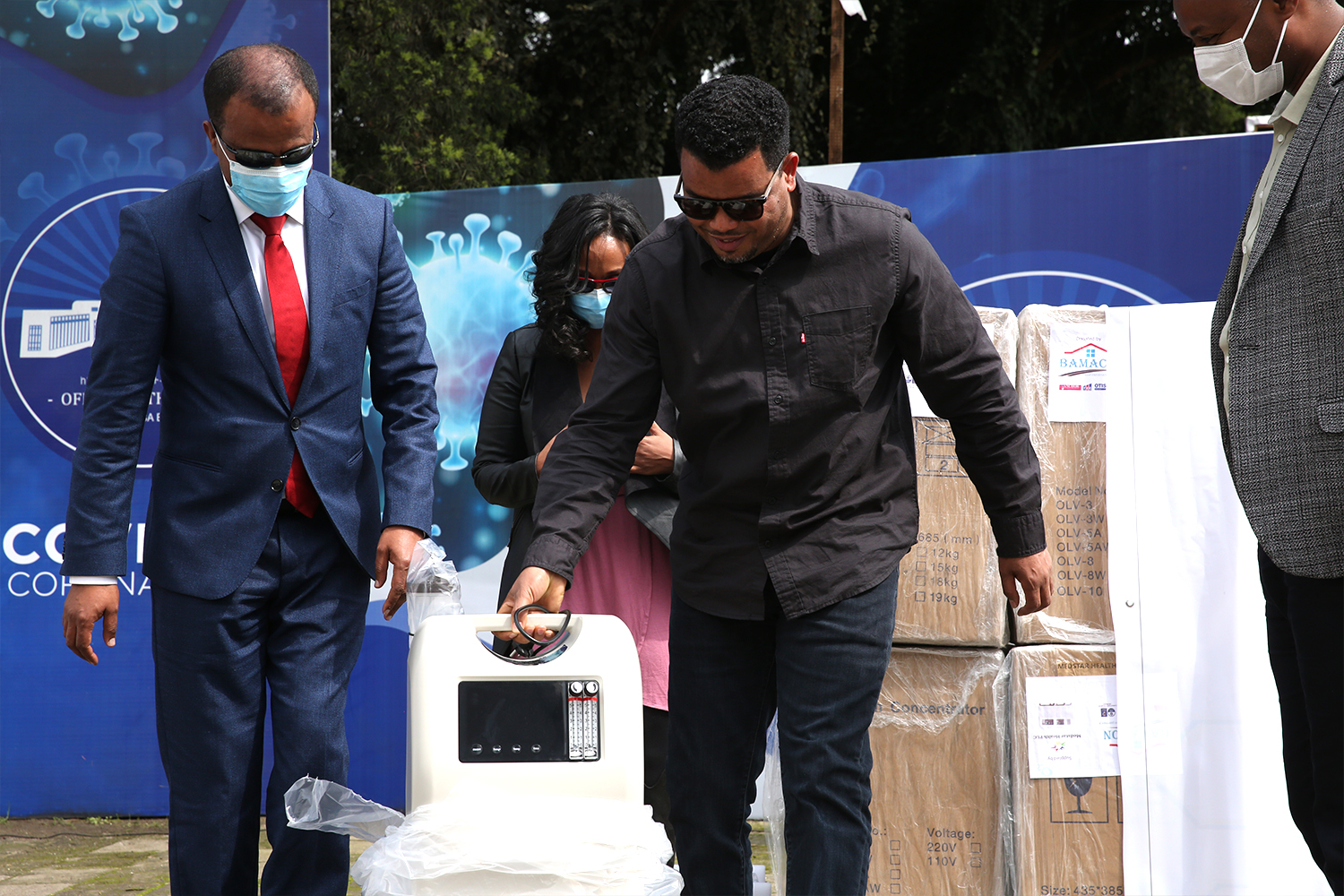
Moreover, 100 Medical oxygen concentrators that are used in hospitals to produce oxygen for patients amounting 10 million birr from Bamacon Engineering as support to the fight against coronavirus.
Ethiopian Industrial Inputs Development Enterprise also extended COVID 19 emergency supply to vulnerable segments of the society through the city Administration.

Foreign companies contribute to black market money spike

More and more foreign companies are said to be now using the black market causing the price of foreign currency to rise even higher and the difference between the legal exchange rate at banks and the black market to be over 10 birr.
According to sources the rate changes every day on the black market. The current estimation is 45 birr per USD while it is about 35 birr at banks. One British Pound is 55.50 birr and one Euro is 50 birr.
In the past years for some time illegal foreign currency market rates went down closer to bank prices. Over the last few months they resembled a roller coaster but during the last couple of weeks they have skyrocketed again and now are much more different than the legal market.
Sources say that this is happening because there are many foreign companies investing in Ethiopia but not registered at the international level, attempting to obtain foreign currency.
These people said that at present, foreign industries investing in Ethiopia are dominant players in the black market. They often are producing just as much as local investors but have better access to hard currency through the suppliers’ credit scheme to import inputs than similar but locally owned businesses.
Experts explained that currently foreign companies are able to manage huge liquidity since their business is the dominant player in terms of production throughout the year and they have a lower production cost than those who get a smaller portion of LC for their businesses.
Experts said that these investors should wait a long period to wire their foreign currency via banks to their home country since the country is in hard currency crunch.
They said that sometimes the investor collects the foreign currency locally but mainly focuses on the remittances sent by diaspora for family here.
The long waiting at banks to transfer their money to home countries pushes foreign investors to become a major player in the illegal currency market, a sales person working with foreign company told Capital. “They are collecting the foreign currency illegally here,” he added. He expressed his speculation that the current increase in the rate of the parallel market may be related with this new and growing demand.
Rotary joins Ethiopia’s Green Legacy Initiative
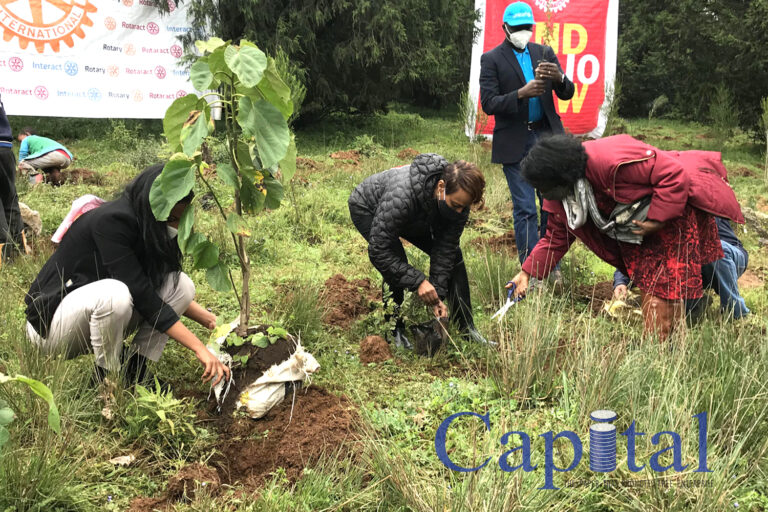
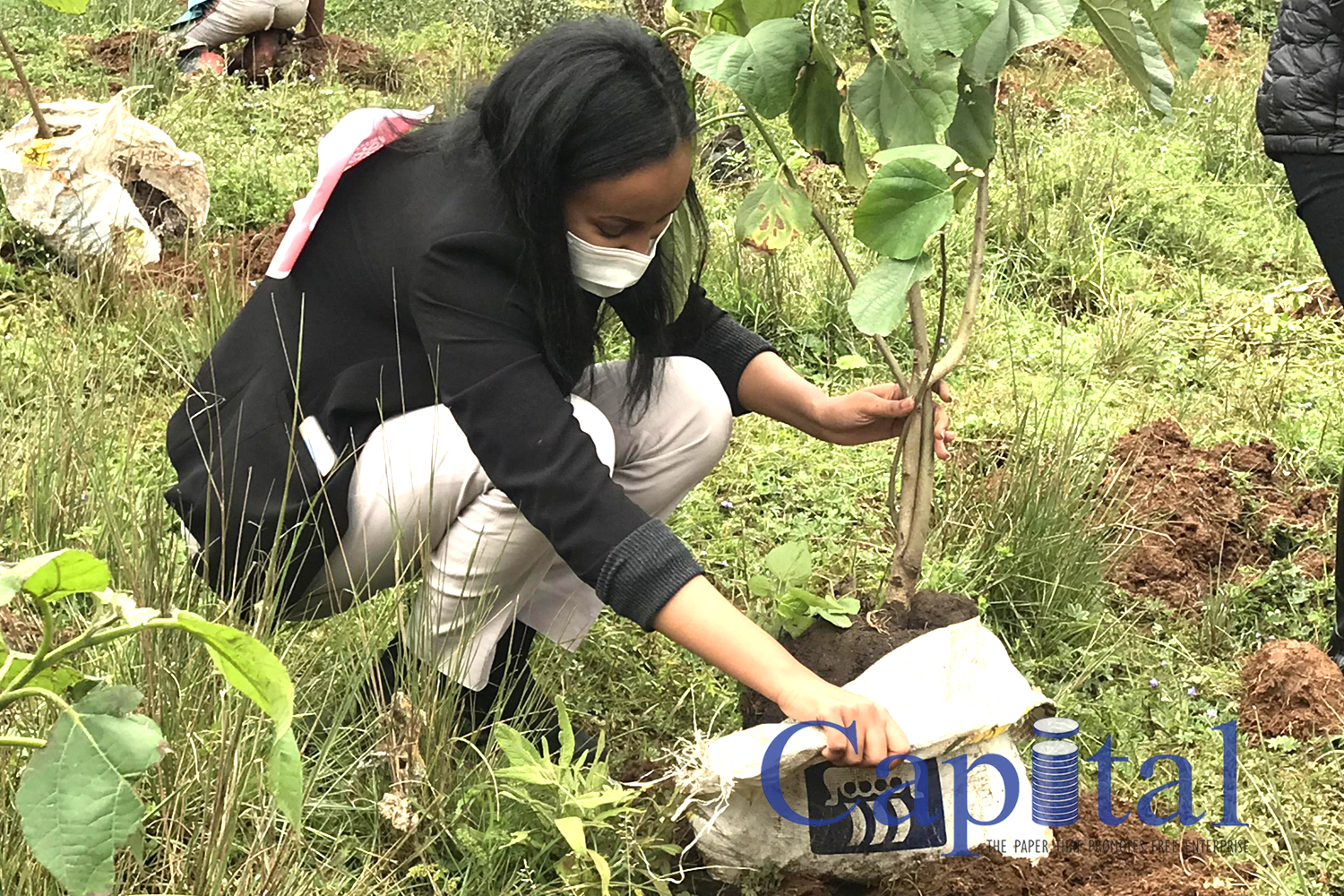
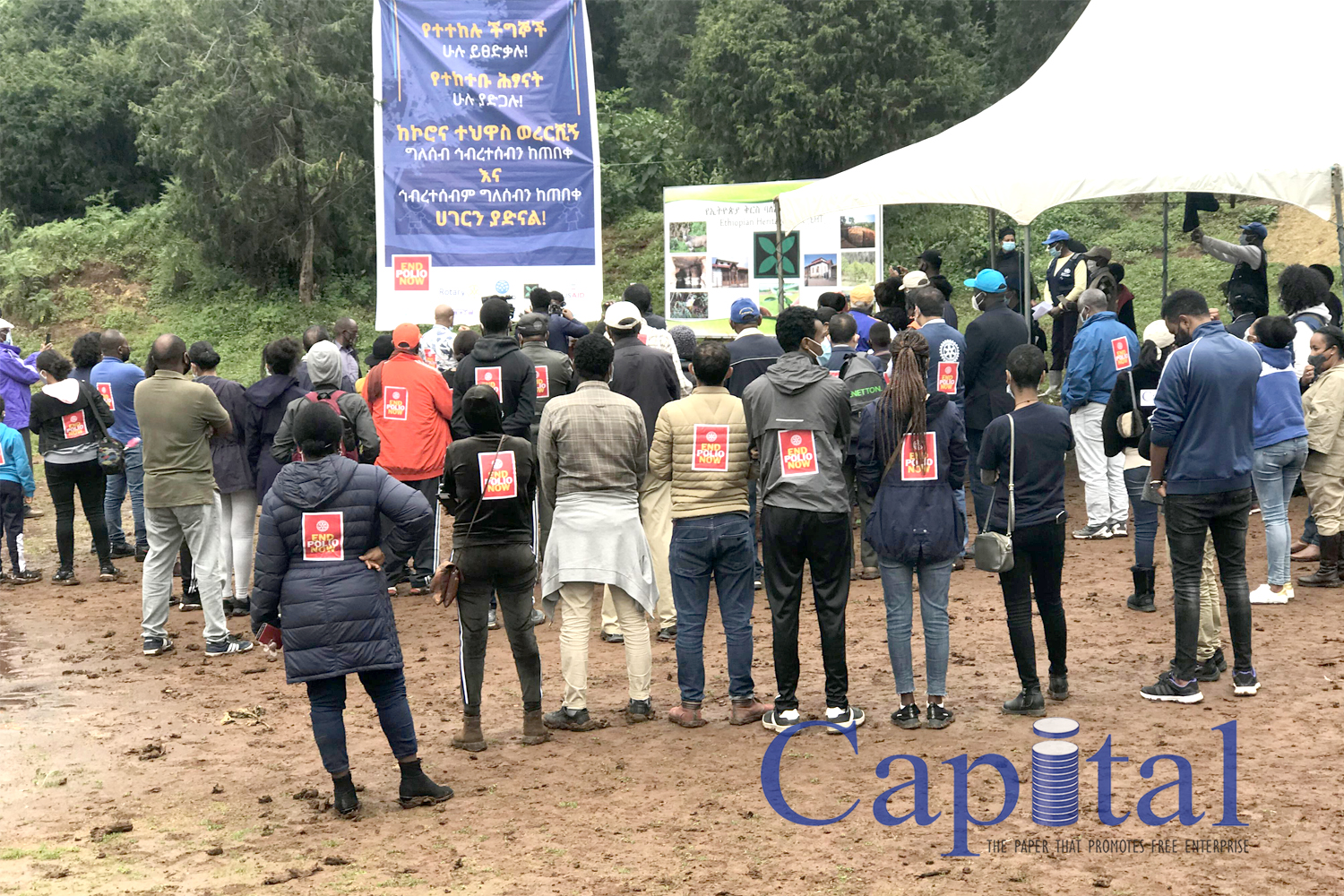
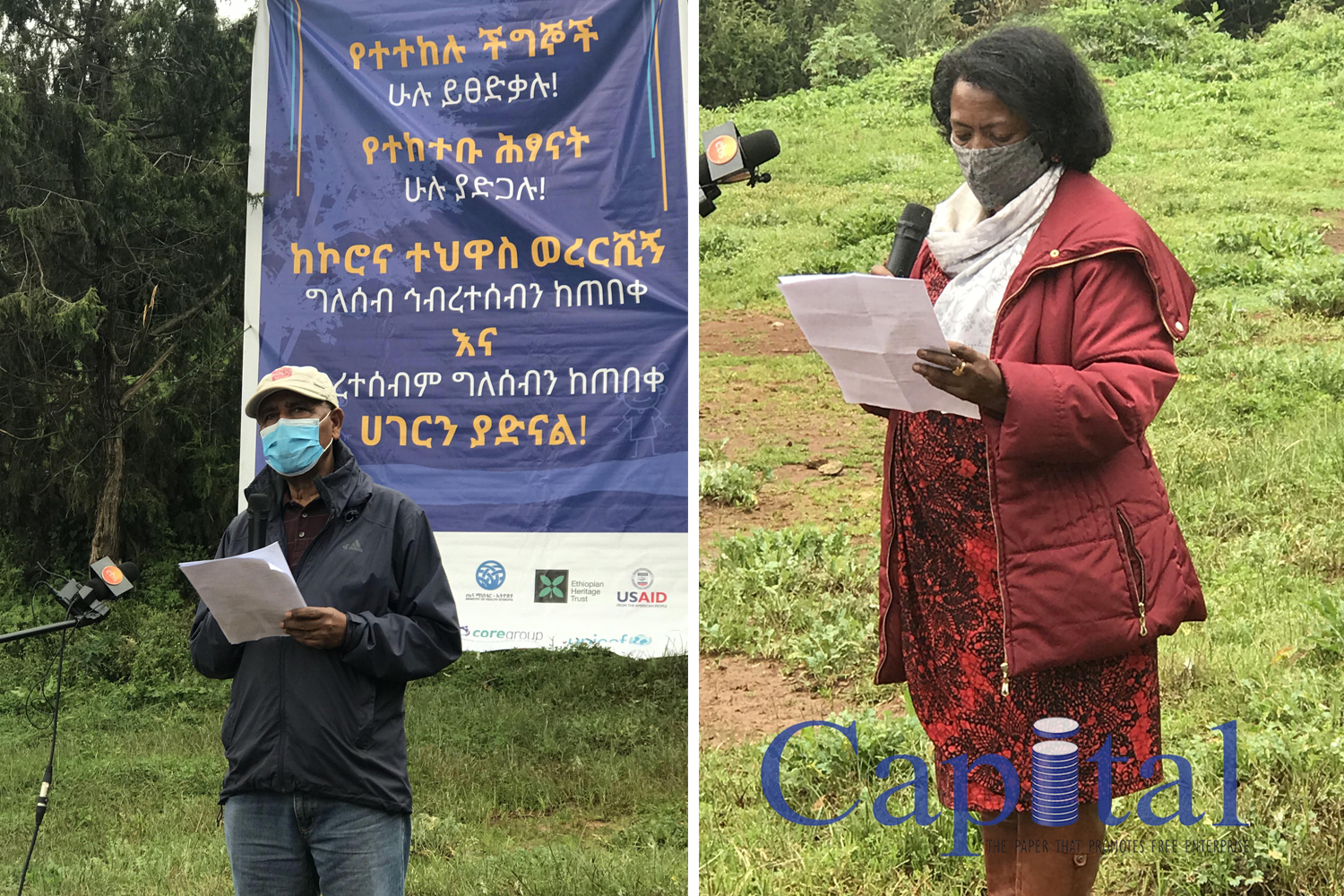
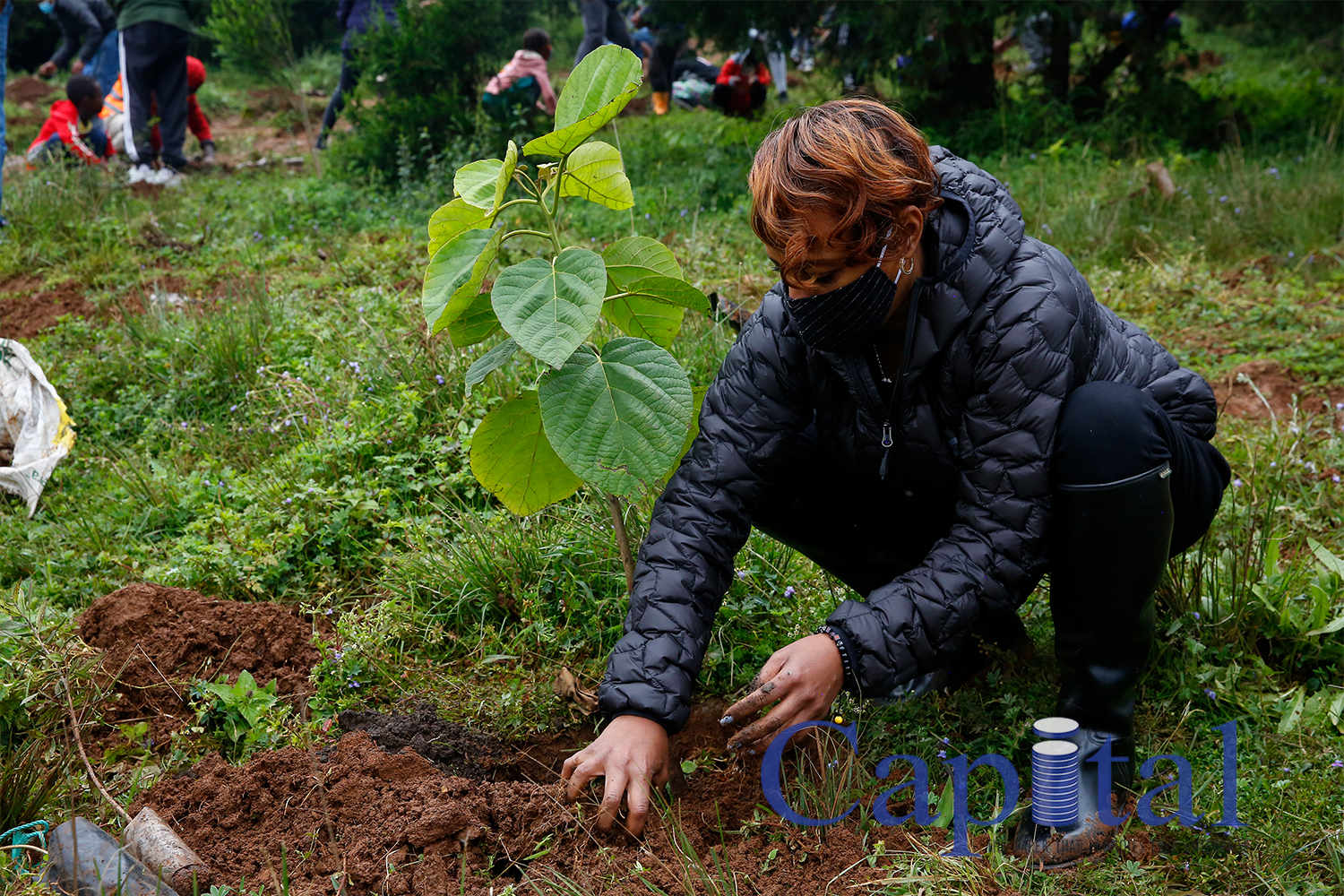
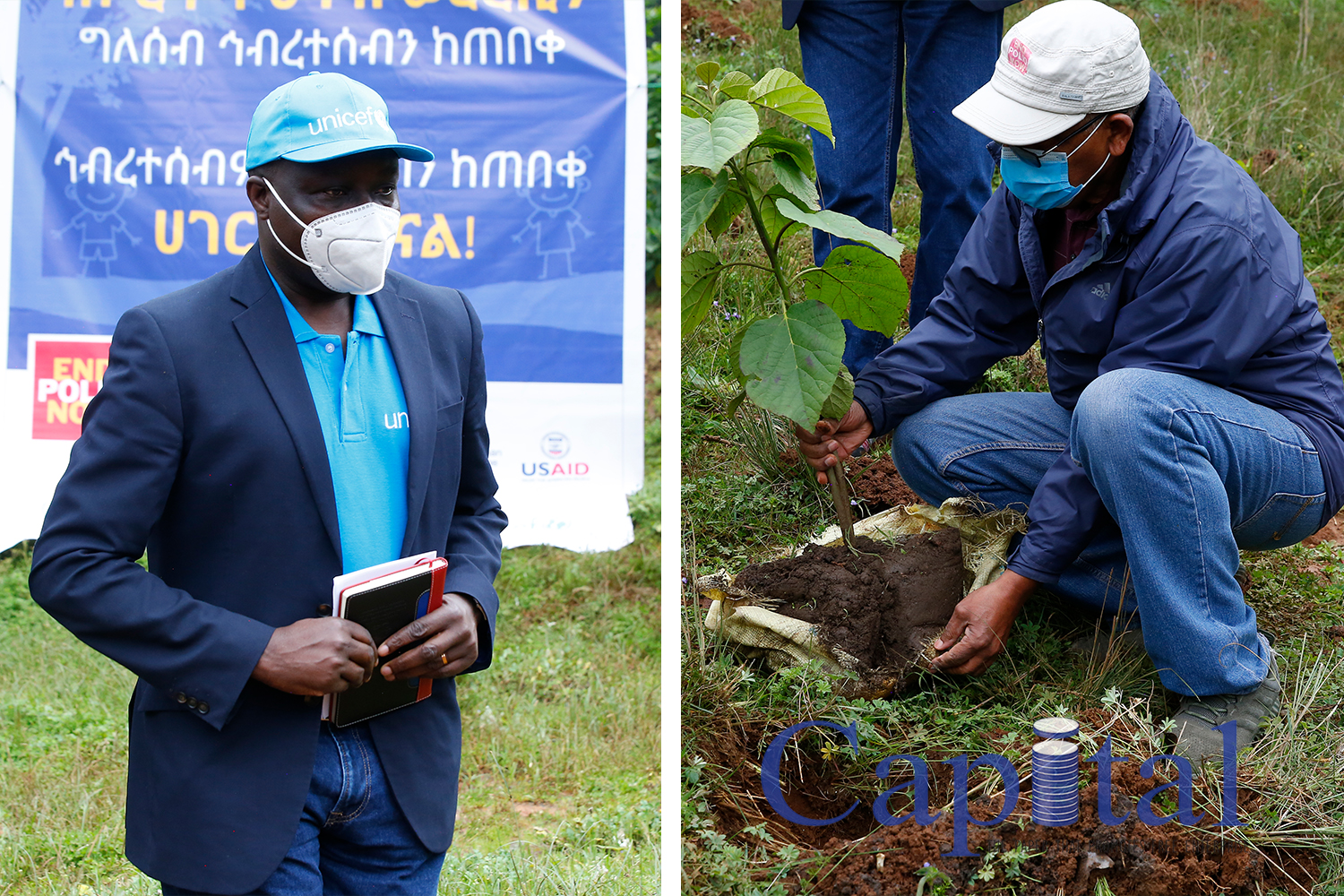
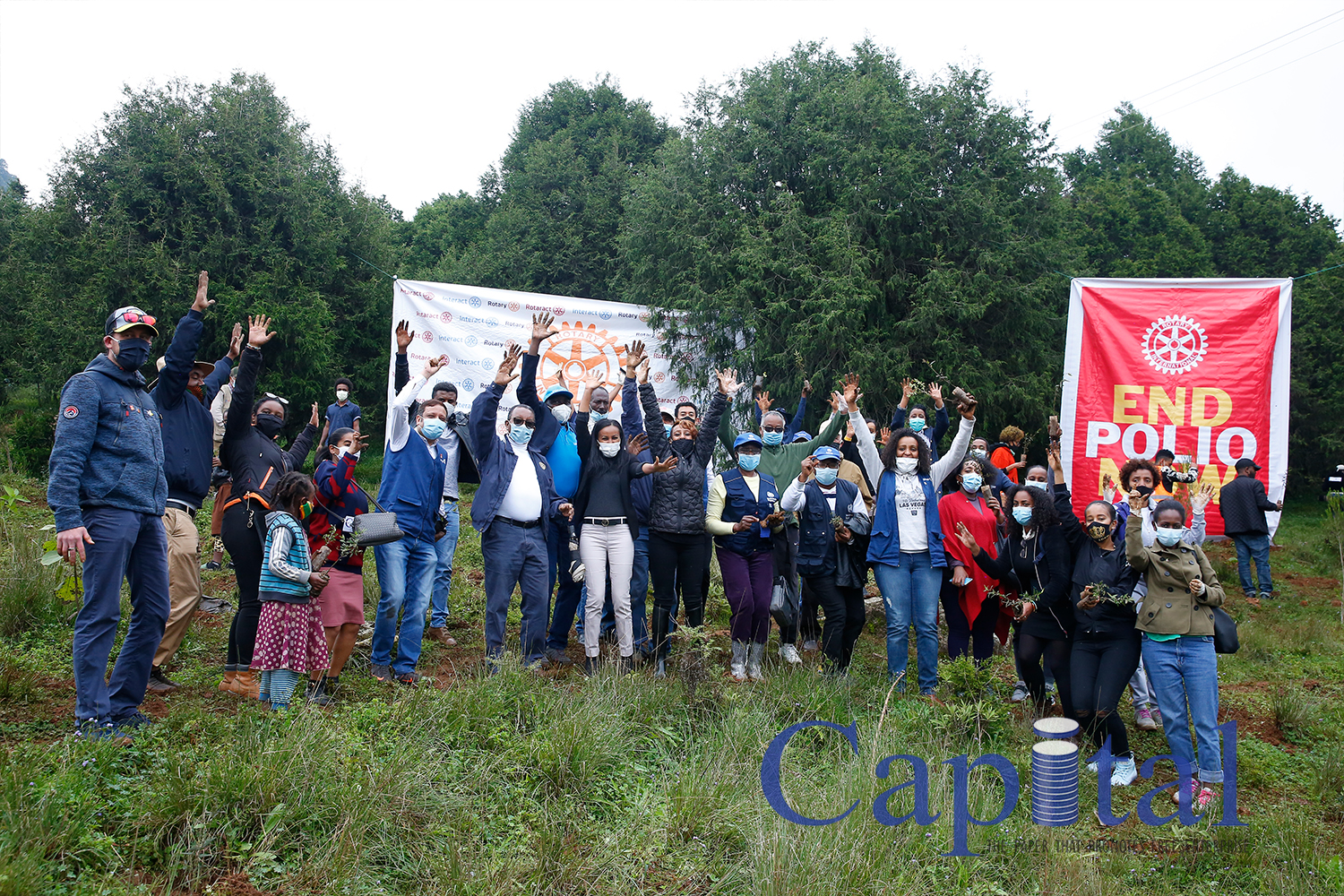
Rotary Ethiopia has planted over 5,000 trees under the National Green Legacy Initiative on Saturday, August 14, at the Kusquam, Entoto, Polio Eradication Initiative Memorial Park.
Apart from the National Green Legacy Initiative, the tree planting also signifies the success of COVID -19 prevention, building routine immunization culture & polio eradication initiatives. Rotary Ethiopia’s initiative planting trees is their second time. Last year they planted over 5,000 trees.
Ethiopia’s Green Legacy Initiative, a grand activity is seeking to plant up to 20 billion tree seedlings over a four-year period.
On Wednesday Prime Minister Abiy Ahmed announced the successful finalization of planting of 5 billion trees this rainy season as per the Green Legacy Initiative.
PM Abiy has taken part in the closing session of the planting campaign held at Mount Bezawit, Bahir Dar City.
On the occasion, the premier said the country has achieved its plan set to plant 5 billion trees ahead of the remaining one month rainy season time.
He expressed gratitude to all Ethiopians for actively responding to the call for the greening campaign and placing their finger prints in the green legacy initiative.
Ethiopia is set to plant 6 billion trees in 2021 rainy season.