

Habesha Steel Mills Plc responded to the government’s call for the support to mitigate the effects of corona virus in Ethiopia.
The Indian firm announced a donation of 50 million birr worth of medical supplies including oxygen to health facilities to help the fight against the pandemic.
According to Kishen Raval, Managing Director of Habesha steel, this is the time we stand together. “The factory will produce the products in its own factory which is located around Dukem, Oromia region,” Raval told Capital.
Starting form the announcement of the first case in Ethiopia the government has been calling individuals and companies to support its resource mobilization in the effort to coordinate the gathering of financial and non-financial materials for COVID-19 emergency preparedness.
Besides giving the medical supplies, the factory is planning to support around 500 people that are living around its factory at a time of a lock down. “We are planning to give them fully prepared hot meal because if we give them the materials there will be a lot of people who don’t have the other ingredients to prepare the food,” said the managing director.
The factory is also well known by its developmental works in the surrounding community. It built 106 houses for displaced Ethiopian citizens, delivered a constant fresh water supply to Taddecha village in Dukem. It also provides the cost of education for many children every year and regularly donates food, clothes, blankets etc to the less fortunate in the area.
“We have built road and speed breakers for municipal school due to the many accidents whilst children were walking to school; we also helped the police force by building police guard posts at different areas,” the managing director told Capital.
Habesha Steel has more than 1500 employees and “we have built the modest customer oriented company and have shown a steady growth due to its focus on quality and modern system of production, this is because of our strong committed and loyal employees from the community, so we have to help each other at such times” said Kishen Raval.
“We want to be a role model for other industries, our collective and concerted efforts to help one another in times of great need will be the only way we overcome this difficult times,” added the managing director.
One of the largest steel factories in Ethiopia Habesha Steel produce full range of reinforcement bars for construction of residential and commercial structures, flyovers, bridges, and power plants.
Habesha Steel donates over 50 million birr for coronavirus fight

African diaspora questions China relationship after spike in discrimination over Covid-19
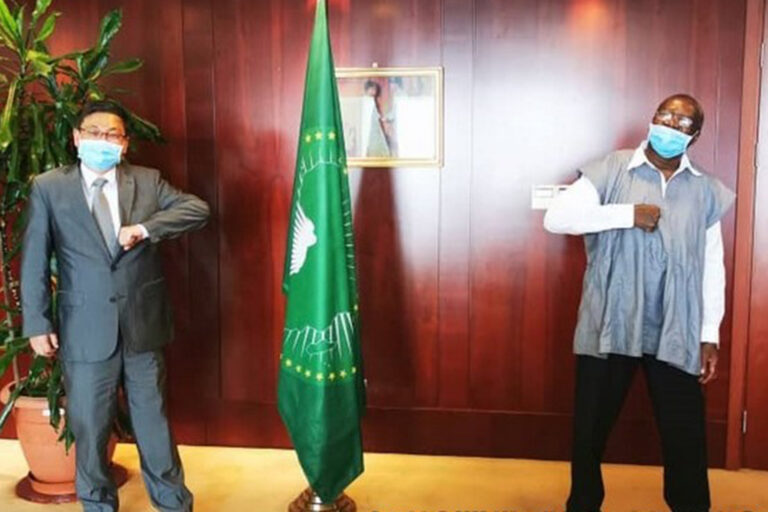
Chinese Ambassador meets African Union Deputy Chairperson over the attack
A spike in racial discrimination in China prompted by fears over the Covid-19 pandemic has led some in the African diapora to reevaluate the relationship between the African continent and Beijing.
Over the past week, footage has been published on social media showing Africans in the southern Chinese city of Guangzhou being evicted from their apartments, refused access to hotels or restaurants, and being forced to sleep on the streets. These incidents occurred ostensibly as part of efforts to halt the spread of Covid-19 in the country but have led to a diplomatic crisis between Beijing and African nations.
The images sparked outrage across Africa, with the hashtag #chinamustexplain trending on Twitter and Chinese ambassadors being summoned by irate officials in Nigeria and Ghana, to name but a few. African ambassadors in China wrote to the foreign minister of China over what they called the “stigmatisation and discrimination” being faced by their citizens.
Following the reported incidents of brutalities and related injuries allegedly inflicted on Africans in Guangdong province in China, the Deputy Chairperson of the African Union Commission, Kwesi Quartey called the Chinese Ambassador to the African Union, Liu Yuxi, to the Commission for a discussion on how the matter would be resolved.
‘Quartey informed Yuxi that given the closeness of the relations between China and Africa, the reported incidences were clearly unacceptable,’ according to a statement from the AU.
In his response, ‘Yuxi reiterated the immense value China places on its relationship with Africa and China’s commitment to protecting and developing this relationship. He registered the regret and embarrassment that the incidents have caused China. Yuxi recounted steps the Government of China has taken, and continues to take to restore calm and to protect the safety, security and dignity of the African population in China,’ the statement reads.
Yuxi also informed the Deputy Chairperson that, the Chinese whose social media post caused the unfortunate incident has been arrested. Also, law enforcement personnel exerting excessive force have been reprimanded and cautioned to exercise restraint whilst discharging their duties. He also mentioned that two hotels have been secured for the affected Africans and the cost would be borne by the Chinese Government. Furthermore, seized passports and personal belongings have been retrieved and handed over to their rightful owners, Yuxi added.
‘Clearly this matter has caused grief, pain and humiliation to all Africans,’ a tweet reads.
‘Africa values its relationship with China but not at any price. Further act of brutality meted out to Africans will not be countenanced by the African Union and indeed all Africans,’ another tweet reads.
Beijing initially chose to dismiss and deny the accounts of unfair treatment.
“We do not have discrimination in China against African brothers,” foreign ministry spokesman Zhao Lijian said on Monday. He then accused the United States of trying to exploit the issue to undermine China’s relations with Africa. The statement came after a group of African ambassadors in Beijing expressed concern over numerous reports of Africans being forced into quarantine or being singled out for scrutiny by health authorities.
The tone then appeared to soften, as China’s Foreign Minister Wang Yi spoke on the phone with Moussa Faki Mahamat, the chairperson of the African Union Commission, with Wang assuring Mahamat that measures were being taken to improve the situation of Africans in Guanghzou. Mahamat later described the relationship between China and Africa in a tweet as being “strong and brotherly”. It now appears that most of the displaced Africans in Guangzhou have found places to stay and that city authorities are engaging in consultations with the African community as well as academics to repair the relationship.
On Monday, ambassadors and envoys from more than 20 African nations met with China’s assistant minister of foreign affairs, Chen Xiaodong. Chen vowed to lift the health measures aimed at African residents except for those with confirmed cases of Covid-19, AFP reported.
Over the past 20 years, China has become an increasingly influential presence on the continent as Africa’s natural resources have helped fuel the country’s meteoric economic development. According to data from Johns Hopkins University, the Chinese government as well as its banks and companies have lent some $143 billion to Africa between 2000 and 2017, often to finance large infrastructure projects. Recent estimates put the number of Chinese citizens currently residing in Africa at one million while some 200,000 Africans live and work in China.
KEY FACTS
- The city of Guangzhou, which has just 463 cases of COVID-19, said that it had tallied 111 imported cases, leading to fears of a second-wave outbreak, according to the South China Morning Post; officials said 10 cases were linked to the business district known as “Little Africa,” including 5 cases linked to a single restaurant.
- Following the outbreak, Guangzhou officials announced that all residents of African descent-about 4,500 people-must quarantine for 14 days “regardless of their previous circumstances or how long they have been in Guangzhou,” reports the South China Morning Post, adding that African residents’ homes will be monitored with tracking devices that will alert officials if they “open the door.”
- The ban led to reports of African residents being evicted and banned from businesses; people have taken to social media to document evicted African residents sleeping on the street, interacting with police and Nigerian diplomats delivering food to their now-homeless compatriots, causing foreign ministers of Uganda, Kenya, Ghana and Nigeria to speak out in protest.
- African diplomats reportedly sent a letter to China’s Foreign Minister Wang Yi saying, “The Group of African Ambassadors in Beijing immediately demands the cessation of forceful testing, quarantine and other inhuman treatments meted out to Africans.”
China has denied these allegations of racism, saying that Africans in Guangzhou are not being targeted, with foreign ministry spokesman Zhao Lijian saying that the Chinese government “treats all foreign personnel in China equally, opposes any differential practices targeting specific groups of people, and has zero tolerance for discriminatory words and deeds,” according to the South China Morning Post. - The United States consulate in Guangzhou advised African Americans to stop traveling to the city on Saturday, the South China Morning Post reports.
- One social media post showed a sign in a McDonald’s restaurant that read: “We have been informed that from now on black people are not allowed to enter the restaurant”; McDonald’s has since told Forbes that once it learned of the sign, it “immediately removed the communication and temporarily closed the restaurant” as it was “not representative of our inclusive values.”
The economic impact of COVID-19 on African cities likely to be acute, says ECA
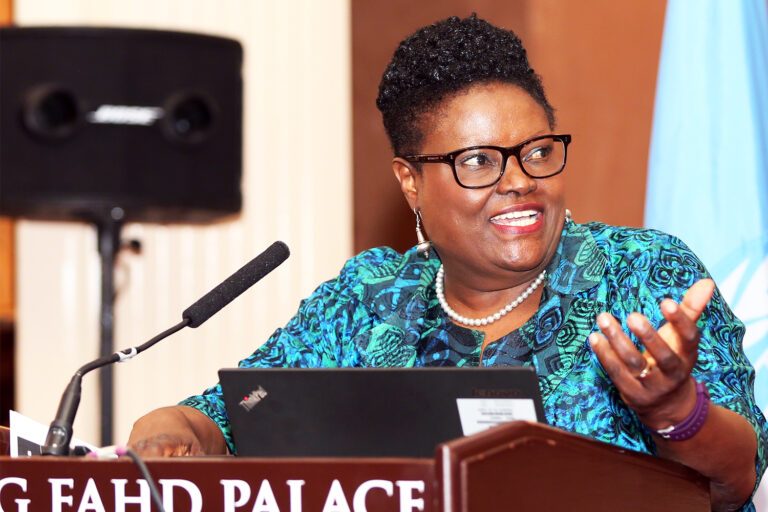
As part of its analysis to inform COVID-19 policy responses, the Economic Commission for Africa, is calling for adequate consideration of the vulnerability of city economies as African governments consolidate efforts and define stimulus measures to mitigate national and regional economic impacts.
“As engines and drivers of economic growth, cities face considerable risks in light of COVID-19 with implications for the continent’s resilience to the pandemic,” states Thokozile Ruzvidzo Director of the Gender, Poverty and Social Policy Division of the ECA.
Africa’s cities are home to 600 million people and account for more than 50% of the region’s GDP. This is even higher at more than 70% for countries such as Botswana, Uganda, Tunisia and Kenya. A third of national GPD (31%) comes on average from the largest city in African countries. As such, the economic contribution of cities in the region is far higher than their share of population.
COVID-19 employment effects in are likely to be severe in urban areas. With urban-based sectors of the economy (manufacturing and services) which currently account for 64% of GDP in Africa are expected to be hit hard by COVID-19 related effects, leading to substantial losses in productive jobs. In particular, the approximately 250 million Africans in informal urban employment (excluding North Africa) will be at risk. Firms and businesses in African cities are highly vulnerable to COVID-19 related effects, especially SMEs which account for 80% of employment in Africa. These risks are compounded by a likely hike in the cost of living is expected as shown for example by some initial reports of up to 100% increase in the price of some food items in some African cities.
Additionally, urban consumption and expenditure (of food, manufactured goods, utilities, transport, energy and services) is likely to experience a sharp fall in light of COVID-related lockdowns and reduced restrictions.
“Africa’s cities drive consumption with their growing middle class with per capita consumption spending in large cities being on average 80 per cent higher at the city level than at the national level. COVID-19 related decline in urban consumption will thus impact domestic value chains, including rural areas,” notes Ruzvidzo.
Further, with the per capita expenditure of African local authorities being the lowest in the world at $26, many local authorities are poorly resourced and less able to contend with the onslaught of COVID-19. Alarming also the likely fall in revenue streams for local authorities due to COVID-19 curtailing their already limited ability to respond to this crisis. Intergovernmental/national transfers which account for 70 to 80 per cent of local authorities’ finance are likely to be reduced due to immediate national response and recovery requirements. Own source revenues which are already low at only 10% of local authorities’ finances with city level lockdowns and restrictions leading to reduced economic activity.
Yet, local authorities are frontline responders to such shocks and crises. Given the proximity to their constituencies, local authorities are well positioned to and already do lead responses to some of the immediate effects, and doing so have a better understanding of needs and necessary measures, and enable higher transparency of accountability.
In light of these circumstances, ECA is proposing specific support to city governments to mitigate and respond to the economic effects of COVID-19, in addition to the immediate health and humanitarian focus. Disaggregating the analysis and identification of priorities and responses at the sub-national and city scales is a first step.
Proactive measures are also needed for urban economic recovery including through measures to boost finances and capacities of local authorities as first responders, short term bailouts and exemptions for SMEs to limit productivity and employment loses, social protection for those in informal urban employment while anticipating the potential of labour intensive public work programs for job creation in the medium term. In this regard, Ms. Ruzvidzo emphasizes that “local governments must be supported because they are better able to respond to local needs including in coordination with community-based structures”.
In the longer term, the acute vulnerability of city economies calls for efforts to revitalize and enhance the productivity of Africa’s cities through adequate investments to address the substantial deficits and barriers they face. With more than half of Africa’s population expected to live in cities in just 15 years, the risks of poorly planned and managed urbanization are considerably high, rendering millions vulnerable to the effects of future shocks.
Coronavirus deals severe blow to services sectors

Personal services sectors such as tourism, hospitality and retail at a standstill due to drastic measures taken in the fight against COVID-19
The COVID-19 pandemic has dealt a heavier blow to personal services sectors compared with other recent economic crises, an UNCTAD analysis shows.
The pandemic has massively disrupted key services sectors, especially tourism, hospitality and retail. This contrasts with the resilience witnessed during the 2008 great recession and the 2011-2013 eurozone sovereign debt crisis, particularly in comparison to trade in goods.
An UNCTAD survey found that in the eurozone, the purchasing managers index (PMI) indicator, a measure of prevailing economic trends, in services and the composite PMI both contracted from above 50 points in January to minus 28.4 and minus 31.4 respectively by mid-March.
3the drastic but necessary social distancing and lockdown measures adopted in the eurozone in the last month,” said Pamela Coke-Hamilton, director of UNCTAD’s international trade division.
Personal services sector nearly destroyed
The strict measures deployed to combat the pandemic have nearly destroyed personal service sectors such as tourism, hospitality and transport.
Millions of economically vulnerable people in developing countries are reeling under the crushing weight of the measures, as these sectors absorb a large share of low-wage, low-skilled and part-time workers, many of whom are women.
“If the crisis persists, the whole tourism industry as we know it in developing countries may collapse,” Ms. Coke-Hamilton warned. Women represent more than half of the workers (54% in 2019) in the industry worldwide.
Restrictions on flights and on ships entering ports, have also affected remittances, a lifeline for millions in developing countries.
According to the World Bank, remittances were set to surpass foreign direct investment in 2019 to reach $550 billion, but both are likely to drop significantly in 2020 due to the pandemic.
Countries such as the Philippines, which relies heavily on remittances from its diaspora working in the personal services sector, along with 7 million tourists annually, may be particularly hard hit.
Other countries where remittances represent a high share of GDP, such as Kyrgyzstan (35%), Tonga (33%) and Tajikistan (31%), will also be severely affected.
Windfall for ICT services
In contrast to COVID-19’s debilitating impact on personal services, the pandemic has handed a windfall opportunity to services powered by information and communication technology (ICT).
They include services enabling teleworking, video streaming, gaming and e-commerce platforms.
The rapid growth of these “impersonal” services is being mostly felt in developed countries, as they boast widespread and higher quality ICT services.
“Nevertheless, this boom will not compensate for the loss of income from personal services sectors, especially in developing countries,” Coke-Hamilton said.
Policy coordination needed at all levels
To address the economic fallout from COVID-19, thematic policy coordination is needed nationally and globally, Coke-Hamilton underscored.
She said health policies should be devised and applied in tandem with macroeconomic, trade and finance policies in a holistic approach.
This is critical in the services sector, which relies on a coherent mix of policies and regulations between the sector and those in trade, investment, competition, industrial, social and other areas.
“Given that strict mitigation measures remain in place as countries battle the pandemic, government programmes to support furloughed or unemployed people through direct payments can help protect vulnerable workers from services sectors,” Ms. Coke-Hamilton said.
Governments should cast their nets wider to support the 164 million migrant workers worldwide, many of whom are women, working in personal services sectors, she added.
Such support may include providing them with secure access to financial services for sending remittances or giving them short-term loans.
Looking ahead, as developing countries continue to nurture exports of personal services as an important source of income, they need to fast-track and upgrade skills in knowledge-intensive ones suach as those powered by ICT.
“This will create jobs that are not just formal, qualified and high-quality, but also resilient,” Coke-Hamilton concluded.
